“Wildflowers are the stuff of my heart!”
[Lady Bird Johnson]

Beside my childhood home was an untamed field — a veritable wildflower meadow. I picked my first Oxeye at the age of two in that field and the humble Daisy has been my favourite flower ever since. That first blossom is pressed and dried in Mum’s bible. It and the many posies I plucked in that field were my introduction to the beauty and, through Mum and Nana, the folklore of wildflowers.

Gypsy and Romany folk keep a small sprig of Tansy blossoms in their boots and shoes at all times for good luck.

Himalayan Balsam has an orchid-shaped blossom, resembling a Bobby’s helmet, hence its fanciful name, “Policeman’s helmet”.

In the Victorian language of flowers, Flower of an Hour symbolizes ephemeral beauty, most likely because its blossoms are so short-lived.

Walking the Marsh Boardwalk Trail at Point Pelee NP, at every turn there is an abundance of these beauties. They must love still water (just look at the algae in the shot above – it looks like a lawn!). In the language of flowers, the Bidens symbolize joy, friendship, and happiness. In Indigenous and First Nations’ folklore, Nodding Beggar-Ticks represent perseverance because of their ability to flourish in the most difficult of conditions.

Common Eastern Bumblebee (Bombus impatiens)
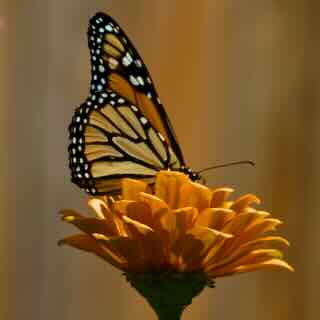
Fibres from this plant have been used to make sewing threads and fishing lines, hence its fanciful name, Swamp Silkweed. In the language of flowers, all Milkweeds symbolize healing, hope, protection and transformation. The latter due to the Monarch Butterflies, because their caterpillars use Milkweed as their sole food source.

In Gypsy folklore, Moth Mullein symbolizes protection. Sprigs of its blossoms were tied to door frames and caravans to ward off demons, curses, and evil spirits.

Indigenous and First Nations’ peoples used wild Columbine in their medicinal remedies (thought to cure headaches and ease childbirth). Important to know: We now know this plant is toxic. The scientific name comes from Aquila ( the Eagle constellation), so-named for its spurs.

Eastern Carpenter Bee (Xylocopa virginica)
Purple Loosestrife is also known as Wound Herb because of its supposed astringent and blood clotting properties. The plant was also used as a bug repellent at one time and some rural folk still swear by its efficacy in this regard.

↑ In the language of flowers, depending upon one’s culture, yellow lotus blossoms represent joy, enlightenment, spiritual awakening and abundance. During the summer months, these beauties do bloom abundantly at Hillman Marsh Conservation Area. ↓


Nightshade produces an attractive red berry which is edible for birds, but poisonous to humans. Nightshade is a firm favourite of witches, who understand it’s immense mystical power, and are adroit at creating effective potions and spells with its blossoms.
And, best for last…

Syrphid Fly (Sphaerophoria contigua)
He loves me. He loves me not…
I am a Daisy girl. Nothing pleases me more than finding an Oxeye on the side of the road, or being given a bouquet of the cultivars. As Kathleen Kelly said in “You’ve Got Mail” — I love daisies. They’re so friendly. Don’t you think daisies are the friendliest flower? In Celtic folklore, Daisies were fancifully known as “fairy flowers” (Slabhra Sí) — Daisy chains were woven to protect children from naughty fairies. In the Victorian language of flowers, dreaming of daisies in the spring brought good luck, but dreaming of them in winter brought bad luck.
To see a World in a Grain of Sand
And a Heaven in a Wild Flower
Hold Infinity in the palm of your hand
And Eternity in an hour†
Many thanks to Terri for posting this challenge. Please take a minute to read her lovely blog post and see her amazing photography: The Flower Hour
‘Til next time, y’all…

In the Victorian language of flowers, Dandelions symbolize a warm and very sincere welcome.
†William Blake, first stanza from his poem “Auguries of Innocence” — page 165 in the chapter “The Pickering Manuscript” in his anthology Collected Poems of William Blake.


Leave a Reply to Terri Webster SchrandtCancel reply